Best for
- Material intake procedures
- Shared workshops
- Businesses buying third-party blanks
Watch for
- Vinyl and faux leather labels
- Unknown foams/plastics
- Treated, painted or glued wood
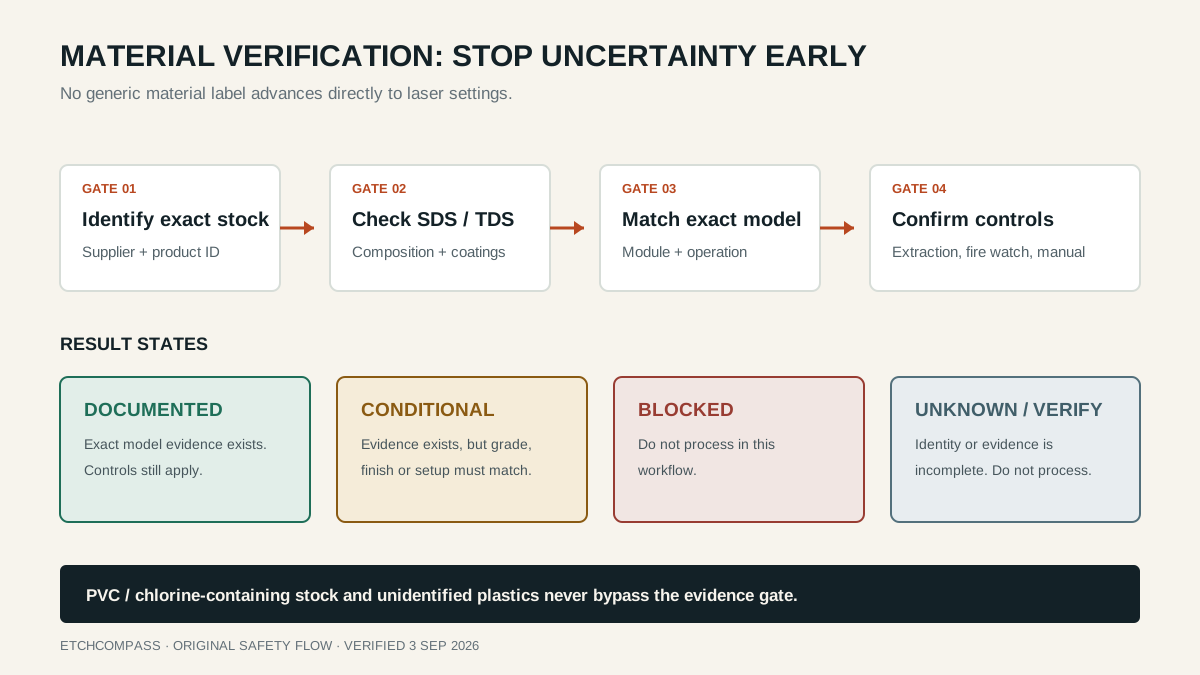
Blocked and unverified are different
PVC/chlorinated plastics are blocked because processing can create corrosive and hazardous emissions. An item marketed only as vinyl, plastic, faux leather or foam remains not verified until its exact chemistry is established.
Do not use improvised burn, flame or chlorine-wire tests. Ask the supplier for an SDS/TDS and exact product identifier.
Wood and composites need the same discipline
Reject pressure-treated or preservative-treated wood and unidentified painted/coated stock. Engineered panels and composites may contain adhesives, resins and fillers that require exact documentation.
If sources conflict, do not choose the more convenient answer. Quarantine the stock until the conflict is resolved.
Compatibility is not a safety certificate
A documented material still produces smoke, particles and fire risk. Follow the model manual, use designed extraction, preserve interlocks, keep the bed clean and supervise continuously.
Decision criteria
Primary and authoritative sources
A source link supports the stated fact; it is not an endorsement.